記事ができると、章ごとの要約と、聴きどころへ飛べる目次がここに並びます。いまは音声で聴けます。
「誕生日のタイミングが人生に与える影響を考えたことありますか。」
お聴き頂きありがとうございます。「理系男の20代さよならラジオ」改め、「理系男の人生取締役会」です。今回はトマトさんが、早生まれというどうしようもない課題について語りあう回です。我々、3月生まれの2人と5月生まれのダイコンさんの主張が交差します。ぜひお楽しみに!
クラゲもトマトも、揃って3月生まれ。つまり2人とも早生まれです。
早生まれのデメリットはよく言われる。小さい頃の体格差、統計的に低くなりがちな学力、知らず知らずのうちに植え付けられる「自分は弱い側」という感覚——これらは客観的な事実として語られることが多い。しかし本人たちが一番傷つくのは、「お前3月生まれなんだ、かわいそう」という言葉でも、体格差そのものでもなく、「強者にはその問題が認識すらされていない」という事実かもしれない。
今回は社外取締役として、5月生まれのダイコンさんが登場。
「5月生まれでよかったと感じたことはありますか?」という問いへのダイコンさんの答えは——「特にない。誕生日なんて聞かないし、誰が早生まれかも把握してない」。
これが「強者の意見」です。悪意はゼロ。でも当事者には刺さる。早生まれを気にしていること自体が、もうコンプレックスの証拠なのかもしれない。
話はさらに広がります。
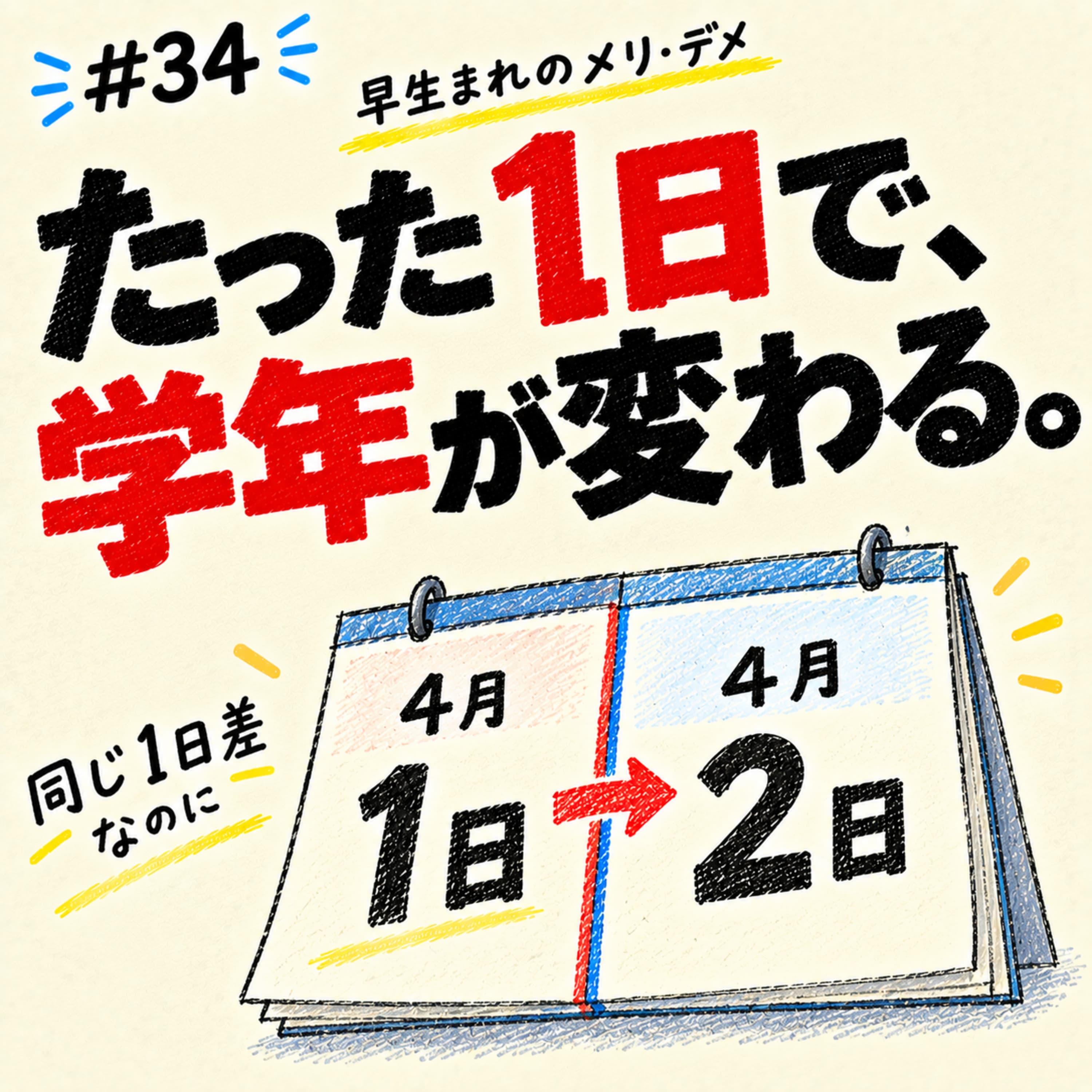
4月2日生まれが日本で最も多く、4月1日生まれが最も少ない——この事実は、出産のタイミングを意図的に操作している親が一定数いることを示唆しています。ヒノエウマの年だけ出生率が下がるのと同じ構造で、「誕生日の設計」は昔から行われてきた。
プロ野球選手は4月・5月生まれに偏っている——これも早生まれ問題の延長です。一方で研究者は早生まれが多いという話もある。飛び級的に早く学習環境に入ることが、ついていけた人間にはプラスに働く可能性がある、という逆の見方も。
メリットも忘れずに。30代になるのが1年遅い——つまり「アンダー30割」を人より長く使える。定年が年度制なら1年多く働ける。深刻な問題から始まって、最後は数百円の節約で締まる、いつものスタイルです。
解決策としては「学年の区切りを4月2日基準から変える」か「AIの発達で生後何ヶ月かベースで教育を受けられる時代が来る」か——どちらも今すぐには無理だが、10年後20年後には変わっているかもしれない。
3月生まれのコンプレックスが解消される未来に、期待します。
通勤・作業のお供にぜひどうぞ。
🌏 For our international listeners:
Welcome to The STEM Guys' Life Board Meeting.
Both Kurage and Tomato were born in March — the last month of the Japanese academic year, which starts in April. In Japan, this makes them "early birthdays" (hayaumare), the youngest in their school year rather than the oldest.
The disadvantages are well-documented: smaller body size during childhood, statistically lower academic performance, and a subtle but persistent sense of being on the weaker side. The effect fades as people reach their late twenties, but the psychological imprint can linger.
This episode brings in a guest — Daikon-san, born in May — as outside perspective. His take: "I've never really thought about it. I don't ask people's birthdays, so I don't even know who's an early birthday." This is the "dominant view" — not malicious, just utterly unaware that the problem exists. Which, as Kurage points out, might be the most revealing data point of all.
A few surprising angles: April 2nd is statistically the most common birthday in Japan, and April 1st the least — strong evidence that some parents actively time pregnancies to avoid the early-birthday disadvantage. Professional baseball players cluster heavily in April and May. Researchers, interestingly, may skew toward early birthdays — being pushed a year ahead of developmental curve, for those who can keep up, might create a hidden advantage.
The upside for March birthdays: you stay under 30 for an extra year, which means one more year of "under-30 discounts." It's a thin silver lining — but they'll take it.
コメントを投稿するにはログインが必要です
ログインページへ